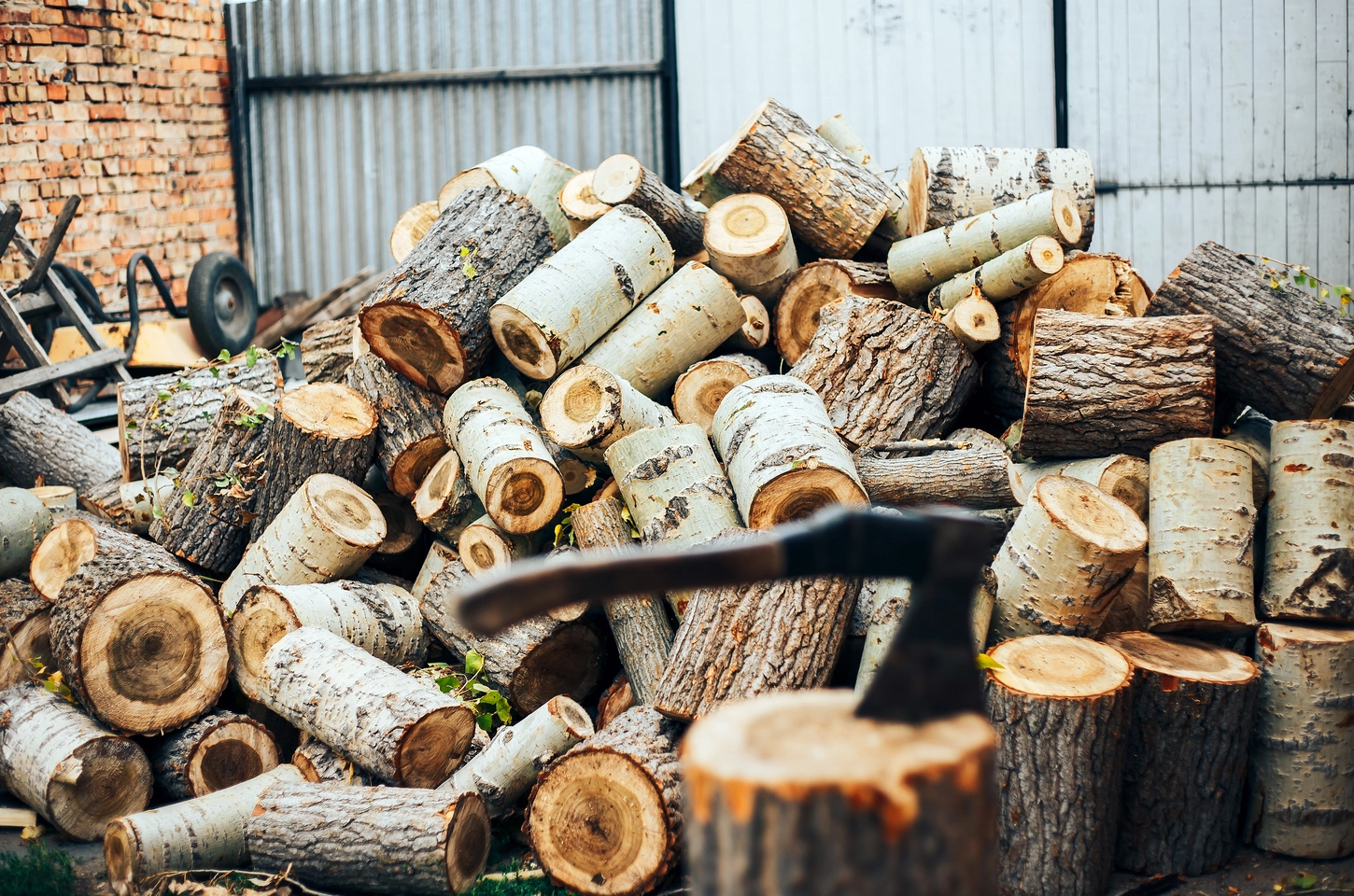
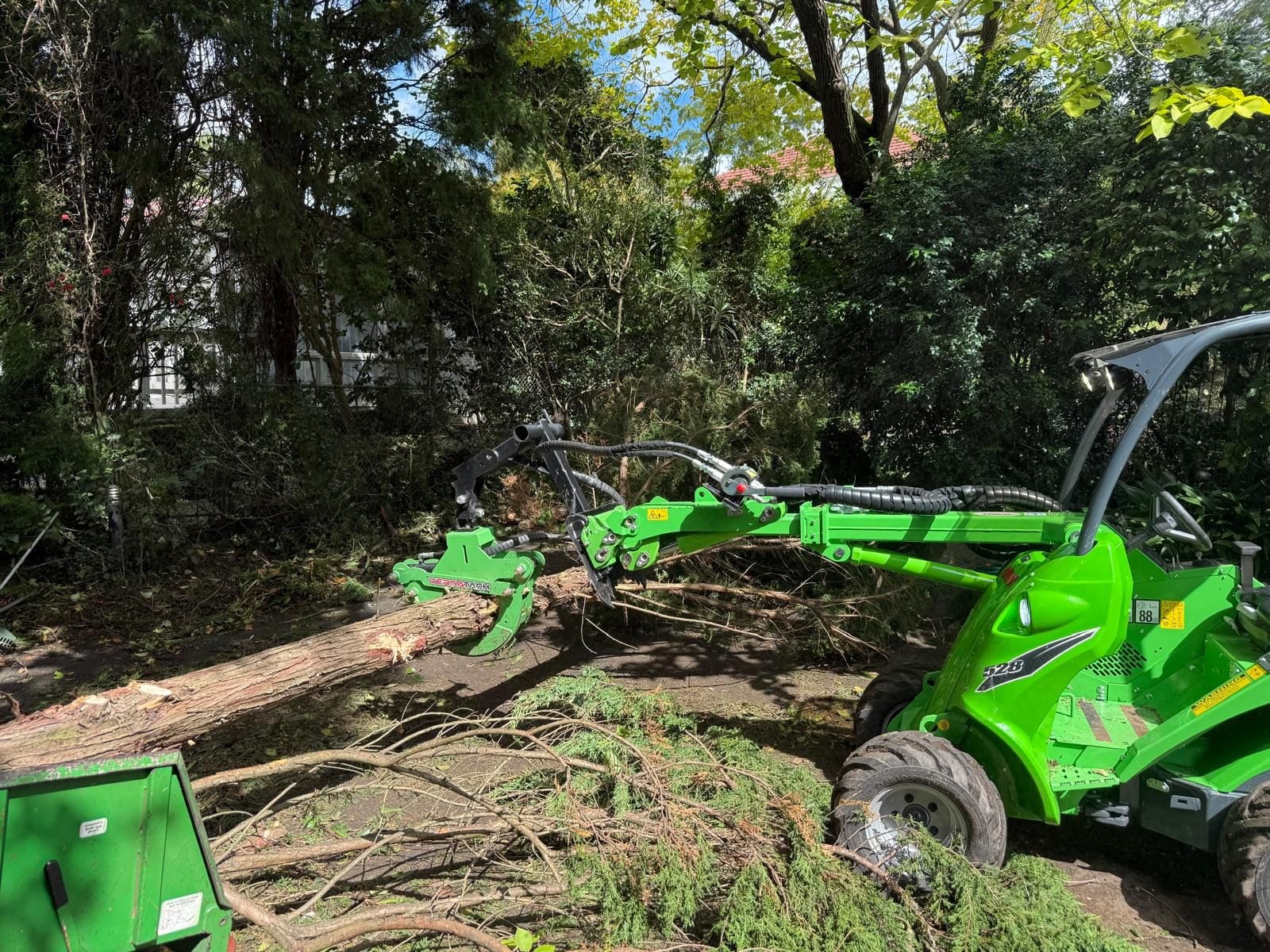
Tree stump removal is the part of a tree job many homeowners forget to budget for. After the trunk and branches are gone, a hard stump remains in the lawn or garden bed. It can damage mower blades, create a trip hazard, produce suckers, attract insects and prevent paving or replanting.
There is no single best method for every property. Grinding is usually the practical choice, but excavation, chemical treatment or manual digging may make sense in specific situations. Burning is unsafe and generally unsuitable in metropolitan Sydney.
Why Remove a Stump?
A stump in a lawn can disappear under grass and become a serious trip or mower hazard. Suckering species such as camphor laurel, privet, poplar, willow and some figs may keep producing shoots. A decaying stump near a home may attract termites or harbour fungal organisms. Roots can also interfere with new paving, slabs, fences and planting.
Sometimes retention is reasonable. A clean stump can support a pot, seat or bird bath, and a short habitat pole may provide value in a bushland setting. Retention only makes sense where the species is not likely to sucker, the stump is not a termite concern and the location is safe.
Method One: Grinding
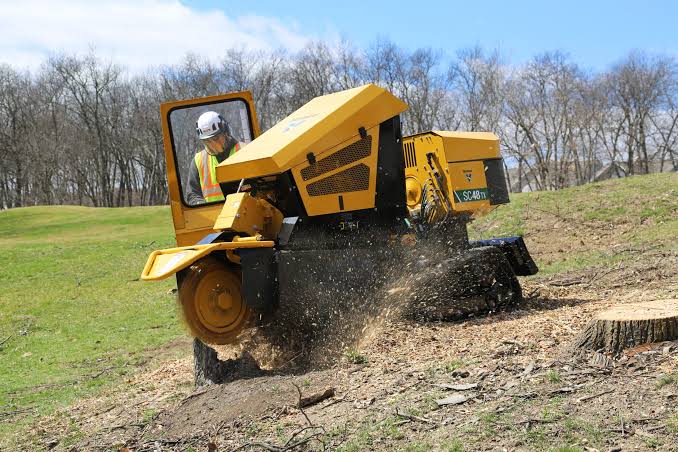
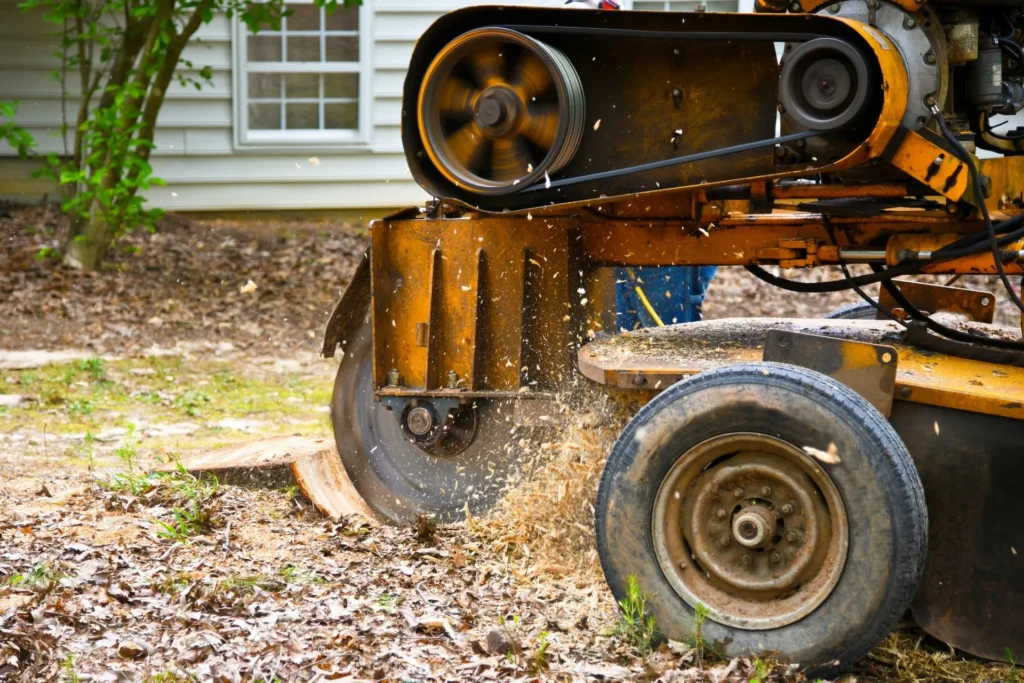
A grinder shaves the stump below ground level with a rotating cutter wheel. It is fast, produces limited excavation and works well beside lawns, gardens, fences and paths. Standard grinding reaches about 150 to 200mm below grade. Deeper grinding may be needed for paving, construction or replanting.
Typical Sydney prices range from $120 to $250 for a small stump, $250 to $500 for a medium stump and $600 to $2,500 for a very large hardwood or fig. Access, rocks, wood density and removal of grindings affect the quote.
Grinding leaves deeper roots to decompose, which is acceptable for most residential situations. It is not the right method if the whole root plate must be removed for a footing or slab.
Method Two: Full Excavation
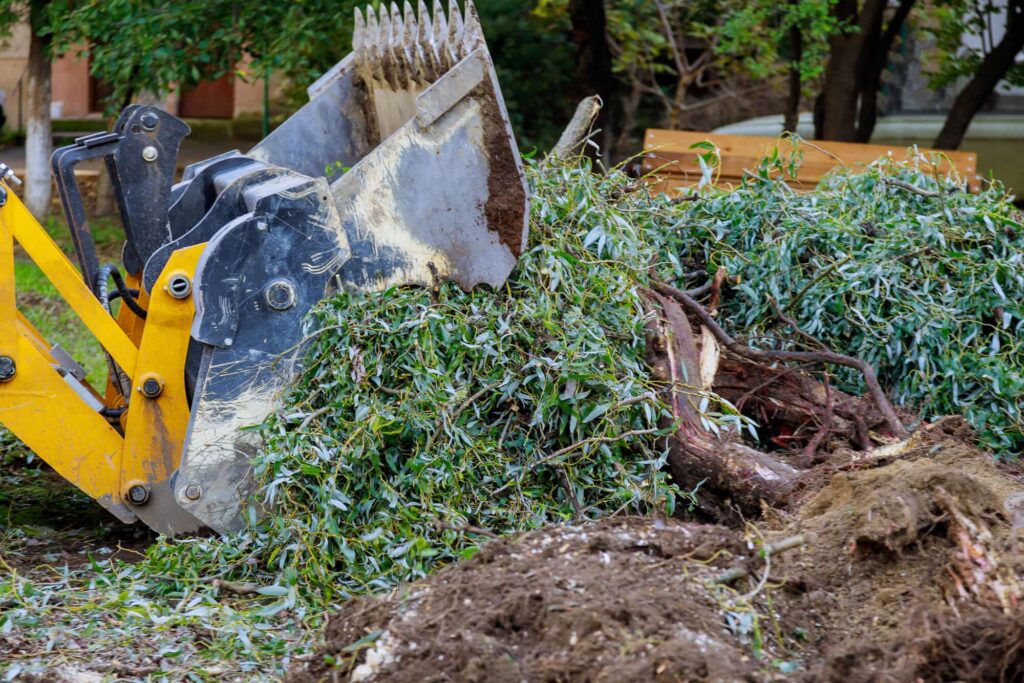
Excavation uses an excavator or backhoe to lever the stump and root plate out. It removes more material but requires machine access and creates a large hole. Spoil, roots and backfill add to the cost. Nearby retaining walls, paving, services and structures may be disturbed.
Excavation may cost $600 to $4,000 depending on machine size, access, disposal and backfill. It is usually justified for construction rather than a normal lawn. Ask an arborist or builder whether complete root removal is genuinely necessary.
Method Three: Chemical Treatment
Chemical products can accelerate decomposition or suppress regrowth, but they do not create an immediate clear site. A dense hardwood stump may take six to twenty-four months or longer to break down. Fresh-cut herbicide treatment may stop some suckering, but product choice and safe handling matter.
Chemical treatment is inexpensive but slow. Keep products away from children, pets, waterways and desirable plants. Follow the label and do not assume a chemical is suitable for every species or location.
Method Four: Manual Digging
Small stumps in soft soil can sometimes be removed with a mattock, spade, saw and leverage. Expose the major roots, sever them and work the stump out gradually. This becomes exhausting with dense hardwood, large root flares or compacted soil.
Manual digging can be appropriate for a small shrub stump. It is generally not sensible for a mature tree stump grinding beside services or retaining walls. Before digging, identify underground utilities.
Method Five: Burning
Burning is often suggested online, but it is a poor option for Sydney homes. Backyard burning of vegetation is restricted or prohibited across metropolitan council areas without approval. Smoke affects neighbours, fire can travel through roots and the stump often survives below ground. Do not use accelerants or attempt to burn a stump beside fences, structures or dry vegetation.
Selecting the Depth
Use 150 to 200mm for lawn and garden beds. Use 300 to 450mm when the area will receive paving, concrete, a deck footing or a replacement tree. Beyond that, discuss excavation rather than assuming a grinder can do everything.
The contractor should write the depth in the quote. “Stump removed” may mean the visible section is ground, while “root plate excavated” means a much larger operation.
Safety and Services
Stump grinders throw chips at high speed and require a controlled work zone. The Safe Work Australia guide to tree-work risks covers stump grinding and related hazards. Ask for eye, face, hearing and foot protection, and keep bystanders out of the throw arc.
Before digging or grinding, identify water, gas, electrical, telecommunications, irrigation and pool services. If the operator cannot explain how services will be checked, do not proceed.
Disposal and Replanting
Grinding produces a wood-and-soil mixture that is not ideal planting medium while it decomposes. Remove it or cap it with quality soil. The NSW EPA garden-organics guidance explains responsible disposal if the material leaves the property.
Research from QUT on urban tree benefits supports considering replacement planting and the broader value of trees. Offset a new tree from the old stump where possible and choose a species suited to the mature space.
Cost Questions
Ask whether the quote includes the call-out, depth, grinding, removal of grindings, backfill, soil and turf repair. Multiple stumps should be priced together. Confirm insurance and whether the contractor will stop if rock or a service is discovered.